

Dish soap and near-boiling water problems can bring your entire home routine to a halt. If you’re tired of slow draining sinks, useless DIY hacks, and uncertainty about when to tackle it yourself or call a pro, this is the science-backed, frustration-free guide you need—no myths, no time wasted.
Key Takeaways
- Dish soap and near-boiling water is the gold standard DIY solution for grease clogs—because only surfactant plus heat can dissolve fat effectively.
- Baking soda and vinegar fizz does not dissolve grease; always remove solid fat before trying chemicals or calling a plumber.
- Persistent, recurring clogs, sewage smell, or multiple affected fixtures signal it’s time for a professional with powerful tools and long-term solutions.
- Why grease clogs form — the simple science every DIYer should know
- Fast DIY emergency: hot water + dish soap method (step-by-step)
- Advanced analysis & common pitfalls
- Conclusion
- FAQ: Grease Clog Kitchen Drain
Why grease clogs form — the simple science every DIYer should know
Grease clogs form when fat, oil, or greasy food residue is rinsed down a kitchen drain while hot and liquid. As these substances move through your pipes, they cool and re-solidify, sticking to inner walls and trapping food debris. Over time, this narrows pipe diameter and causes stubborn clogs. The only way to break up fat reliably is to use heat (which liquefies grease) together with a surfactant like dish soap (which lowers surface tension and lets oil mix with water). Simple boiling water alone isn’t enough—without a surfactant, oil just recoats pipes further along. This explains why “how to dissolve grease in drain pipe” searches almost always steer toward solutions that combine both elements. Baking soda and vinegar, despite their fizz, don’t have the necessary chemistry to melt grease, and often simply deodorize your drain rather than truly unclogging it [source].
Fast DIY emergency: hot water + dish soap method (step-by-step)
When you’re facing a grease clog kitchen drain, the most effective, plumber-approved approach is much simpler than you might think. Here’s how to clear a kitchen sink clogged with grease using just dish soap, hot water, and a little patience—no harsh chemicals or expensive gear required.
- Remove standing water: Scoop out as much water from your sink as possible.
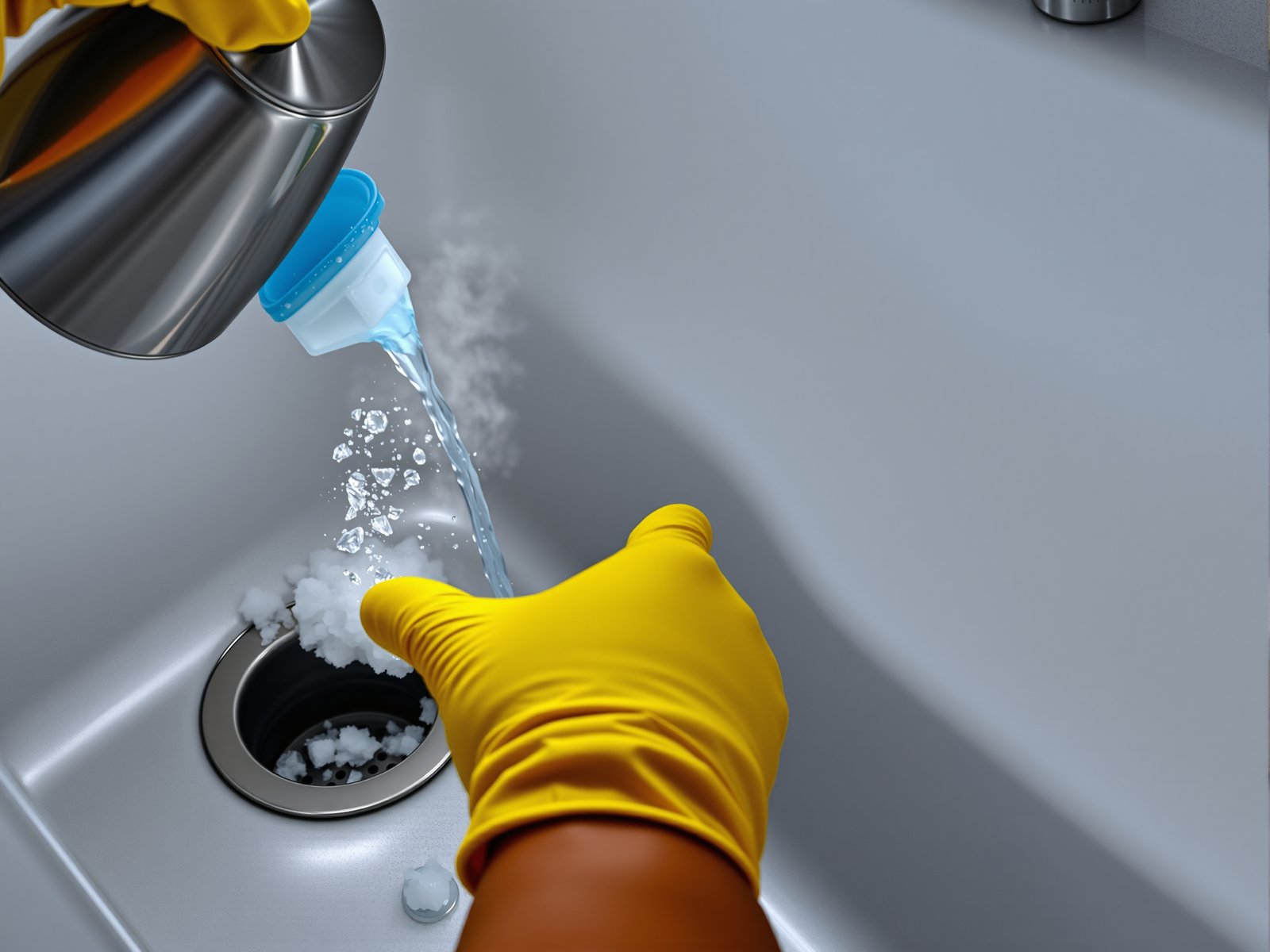
- Add dish soap: Squirt a generous amount (at least 2–4 tablespoons) of grease-fighting liquid dish soap directly into the drain opening.
- Heat water: Boil 2–3 liters (about half a gallon) of water. If possible, do not use a glass kettle over an old porcelain sink—let the water cool for 1 minute after boiling to prevent cracking.
- Pour carefully: Slowly pour the hot water over the dish soap directly into the drain, aiming to keep all the heat and soap going down the pipe.
- Wait and observe: Allow 5–10 minutes for the heat and surfactant to liquefy the grease.
- Repeat as needed: Grease drain clog hot water treatments almost always require 2–4 repetitions for severe blockages.
- Optional step: Add coarse salt (after or between soap cycles): Pour 1/2 cup of coarse salt into the drain, followed by more hot water, to help scrub pipe walls and dislodge softened residue.
- Flush thoroughly: Once water starts to drain better, run hot tap water for at least 3–5 minutes to move all the broken-up grease entirely out of your system (detailed source).
If repeated hot water and soap cycles don’t resolve a grease drain clog, you might need to escalate:
- Remove the P-trap: Place a bucket under the U-shaped pipe under your sink. Unscrew the connectors (use gloves) and gently remove the trap. Dispose of solid fats in a trash bag—never into another drain.
- Use a plunger or a hand snake: If the clog is near the trap, a strong plunge or a manual snake can help dislodge and pull out remaining debris. Even a bent wire coat hanger can help in a pinch [source].
For deeper clogs or for sink clogs that resist both hot water and mechanical removal, consider an Enzymatic drain cleaner (see our guide: Enzymatic Drain Cleaner Safe For Old Pipes), or move on to a professional-grade approach.
Advanced analysis & common pitfalls
Many “quick fixes” for grease clogs fall short. Here’s what most guides get wrong, common mistakes, and what actually works—complete with a direct comparison table for clarity.
| Method | Does it dissolve grease? | Safety | Best Use | Risks/Downsides |
|---|---|---|---|---|
| Boiling water alone | No | Safe for most pipes; risk to very old/fragile sinks | Maintains flow after main clog is cleared | Doesn’t remove stuck grease; only moves loose fat further |
| Dish soap + hot water | Yes | Safe and recommended | First-line DIY for every grease clog kitchen drain | Must repeat multiple times; not for severe “brick” clogs |
| Baking soda & vinegar | No | Safe, only for deodorizing | Freshens drains after grease is gone | Doesn’t cut grease; may cause false hope or wasted time |
| Coarse salt + hot water | Some scrubbing | Safe | Supplements soap/hot water for stubborn residue | Works only in combo with other methods |
| Commercial degreasers (lye/NaOH) | Yes | Hazardous; can damage metal/PVC/septic | Only if pipe is in good condition & label followed exactly | Corrodes older pipes, kills septic bacteria, chemical burns |
| Enzymatic/bio-cleaners | Gradual | Septic safe | Monthly maintenance; slow improvement in buildup cases | Not a fast fix; won’t clear severe clogs overnight |
| Mechanical removal (snake/plunger) | N/A (removes solids) | Safe with care | Essential before chemicals or pro work | Messy; risk of push-past or pipe damage if forced |
| Hydro-jetting (professional) | Yes (restores full flow) | Must be done by pro | Deep, recurring clogs or when multiple fixtures slow | Expense; risk to damaged/fragile pipes if misapplied |
| Pipe relining (professional) | Restores pipe, prevents future stick | Safe when pro-installed | For recurring, chronic grease buildup drain issues | High cost; permanent solution |
- Baking soda and vinegar fizz will not melt grease: Multiple plumber sources confirm this. It’s fine for monthly deodorizing, but not for real clogs (source).
- Physical removal is essential: Always clear as much solidified fat as possible before adding chemicals—this is true for both enzyme and alkaline drain cleaners. See actionable tips in our Clogged Drain Fixes Every Homeowner Should Know Today guide.
- Don’t overdo harsh chemicals: Many cheap degreasers can corrode pipes, destroy PVC seals, and kill septic bacteria—leading to expensive failures. Only use chemical solutions if you’re sure your pipes are in good shape, and always follow safety advice, including ventilation and PPE (source).
- Multiple cycles are often needed: Unlike viral one-time “hacks,” you may need 2–4 or more hot water-soap cycles for a real grease clog kitchen drain. If it’s not draining at all after that, escalate to mechanical or pro solutions. See our deep-dive guide to Hydro Jetting Drain Cleaning for chronic or severe issues.
Want a reliable, all-in-one guide to Top Drain Fix Products, Lawn Care & Pet Essentials? Explore side-by-side reviews and actionable steps.
Conclusion
The real fix for a grease clog kitchen drain is grounded in science: you need heat plus a true surfactant to liquefy and rinse out fat. Baking soda and vinegar won’t cut it for severe blockages, harsh chemicals threaten your pipes and septic tank, and even the best enzymes only work after the solids are gone. Start with the dish soap and hot water method. Escalate to mechanical removal and—if you’re still stuck—book a pro before risking pipe damage. For long-term prevention, monthly enzyme treatments and zero fats down the drain are your best insurance. Ready to restore real flow to your kitchen? Try these steps and share your results—or call a trusted plumber for peace of mind.
FAQ: Grease Clog Kitchen Drain
What will dissolve grease in a drain?
The most effective DIY solution is combining a grease-cutting dish soap with very hot (not boiling) water. This liquefies the fat and suspends it in water so it can be flushed out. Enzyme-based cleaners are good for ongoing maintenance afterward, but not as a first fix for a blockage.
Does baking soda and vinegar work for grease clogs?
No. Despite the popular fizz reaction, baking soda and vinegar do not have the power to break down fat or oil in kitchen pipes—use this combo only for deodorizing, not for fixing a grease clog kitchen drain.
Is it safe to use chemical degreasers or lye-based cleaners?
Extreme caution is needed. Many store-bought degreasers or lye-based drain openers can corrode older pipes (metal or PVC) and kill essential bacteria in septic systems. Use them only as a last resort and carefully follow safety instructions. When in doubt, opt for enzyme-based or call a professional.
How do professionals clear severe grease clogs?
Plumbers use powerful methods such as motorized drain snakes, CCTV drain inspections, hydro-jetting (with 3,000–4,000 psi hot water and alkaline solvents), and if necessary, pipe relining with epoxy to restore pipe diameter and prevent new buildup. These tools and techniques are not available to most homeowners.
How do I keep my kitchen drain from clogging with grease again?
Wipe all fats and food scraps into the trash before rinsing pans, never pour grease down the sink, use a sink strainer, and do a monthly enzyme treatment plus hot-soap flush. See maintenance hacks in our Enzymatic Drain Cleaner Safe For Old Pipes guide.