

Sewer inspection camera with sonde technology is transforming how plumbers, contractors, and municipalities locate underground sewer lines and diagnose sewer problems with precision and minimal digging.
Key Takeaways
- Modern sewer inspection cameras with sondes deliver advanced HD imaging, wireless video transmission, and AI-driven analysis for greater accuracy in locating underground pipes.
- Common user frustrations include weak lighting, navigation failures in bends or murky conditions, and occasional sonde signal limitations—especially with deep or nonmetallic lines.
- Investing in a high-spec system offers significant efficiency gains, but understanding pitfalls like interference and certification requirements is critical for reliable field results.
- What are Sewer Inspection Cameras with Sonde and Why Use Them?
- How to Use a Sewer Inspection Camera with Sonde: Step-by-Step Instructions
- Advanced Analysis & Common Pitfalls
- Conclusion
- Frequently Asked Questions
What are Sewer Inspection Cameras with Sonde and Why Use Them?
Sewer inspection cameras with sonde are specialized tools combining video inspection and precise line locating technology. The camera head threads into drains or sewer lines, sending live HD video back to the operator, while the sonde (a tiny radio transmitter) emits a unique frequency that can be traced from above ground, revealing the pipe’s exact underground path.
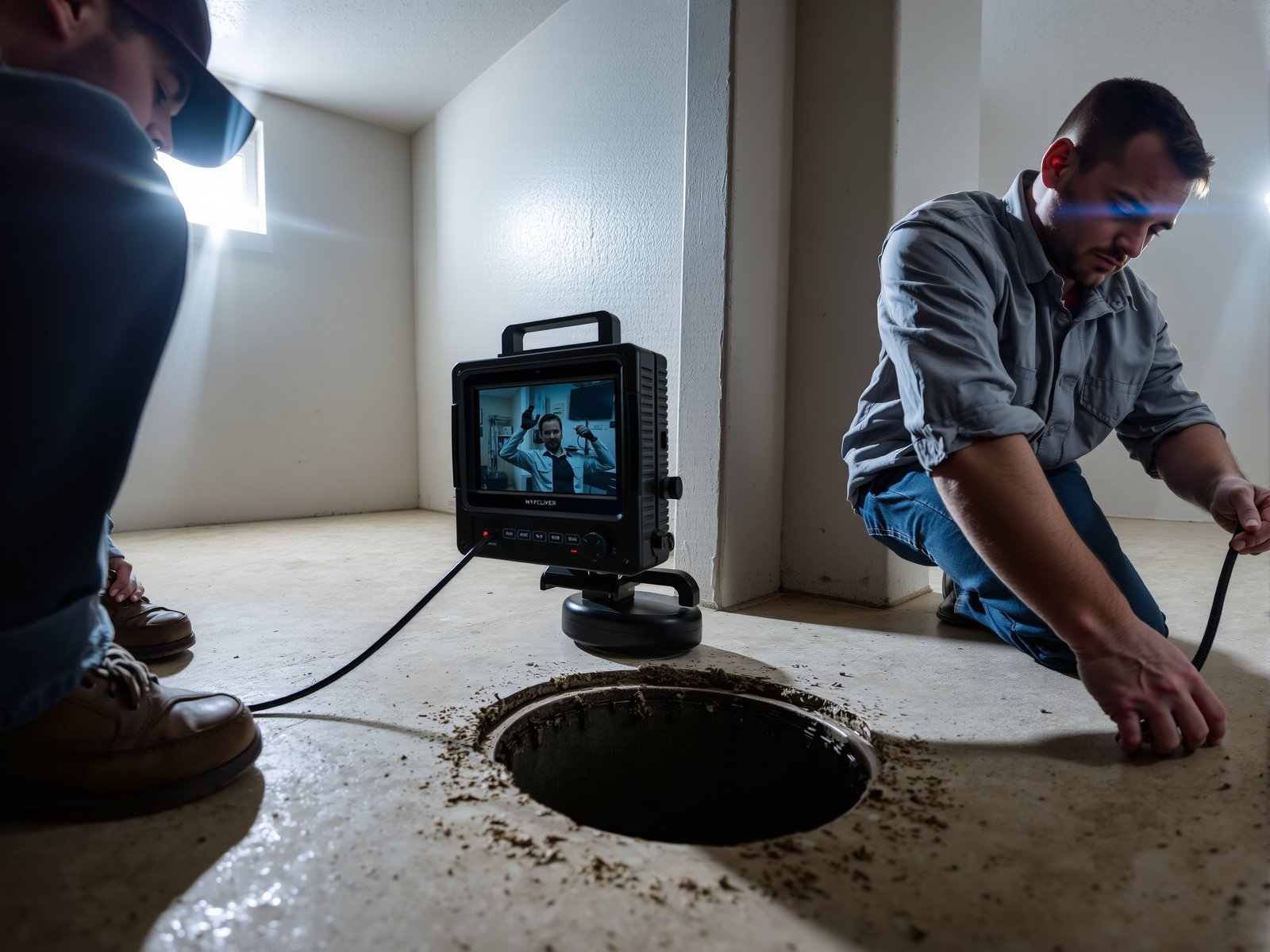
With the rise of HD and UHD imaging, adaptive LED lighting, and multispectral technology, defects—such as cracks, root intrusion, or leaks—are easier to spot. Leading models in 2024 include wireless real-time video, backward compatibility for existing equipment, and AI analysis with 3D mapping capabilities. For example, CUES’s OZ4-HD system integrates with GraniteNet software to streamline documentation and meets NASSCO PACP standards for municipal compliance.
Using a sewer inspection camera with sonde eliminates unnecessary digging, speeds up diagnosis, and ensures that both the camera visual and the physical line location are accurately matched—crucial for pinpoint repairs in urban or landscaped areas.
If you’re handling persistent blockages or planning future pipe upgrades, aligning your diagnostic tools with these new advancements can save substantial time and cost compared to traditional, invasive methods. For more on fundamental drain fixes, see our guide on clogged drain fixes every homeowner should know.
How to Use a Sewer Inspection Camera with Sonde: Step-by-Step Instructions
Below is a straightforward, field-tested workflow to help you use a sewer inspection camera with sonde for precise pipe locating and blockage diagnosis.
- Inspect and Prep the Camera: Check cable for abrasions, ensure the LED is functional, and make sure the sonde is properly seated with fresh batteries. If the area is wet or muddy, quickly wipe down connectors before powering up.
- Access the Cleanout or Drain: Remove any access cap or drain cover. Always wear gloves and flush a small volume of water to clear loose debris, improving the camera’s visibility.
- Activate Camera and Sonde: Switch on the video system and activate the sonde transmitter. If your system offers multiple frequency modes, match the locator frequency now. Record a baseline signal above ground for quick reference.
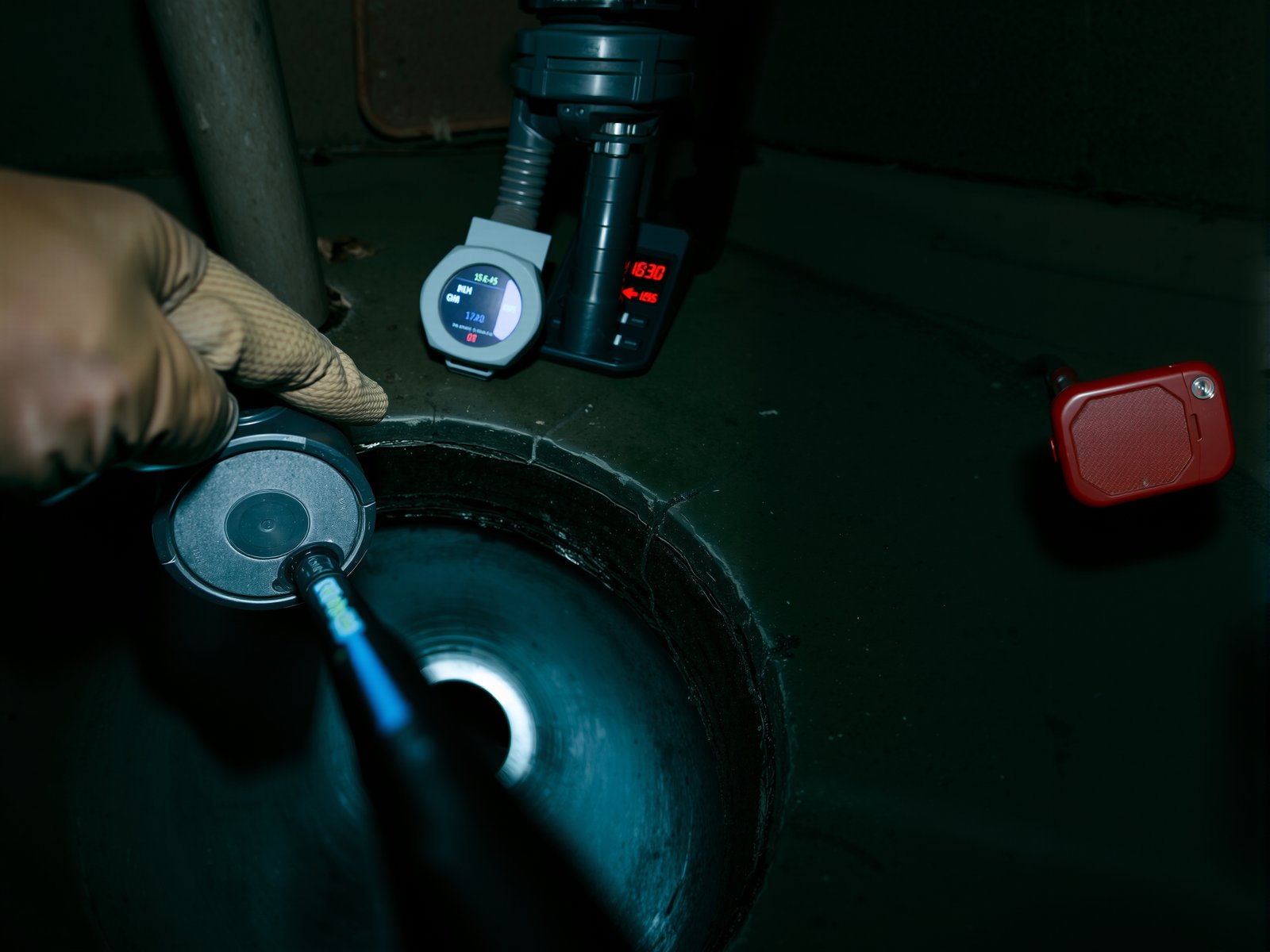
- Insert the Camera Head and Advance: Slowly feed the camera into the pipe, monitoring both the video feed and locator readings. Stop every few feet to take notes or screenshots of pipe features, cracks, or blockages.
- Locate Blockages Using the Locator: When the camera encounters a blockage, turn up the locator sensitivity and trace directly above the pipe. Mark the ground or floor where you receive the strongest signal to know exactly where to dig or cut.
- Verify and Document: Use built-in software features to tag defects. If using a model like CUES OZ4-HD, you can export findings directly to maintenance platforms.
- Remove and Clean: Slowly retract the camera, cleaning the lens with each withdrawal. Store both camera and locator in protective cases to avoid wire or lens damage.
- Review Results: Playback recorded footage and double-check locator accuracy for each marked point, especially before any excavation or repair work.
For stubborn blockages that resist camera passage, see our in-depth guide on drill powered drain auger solutions or learn about safe enzymatic cleaners for older pipes in our proven guide to enzymatic drain cleaner use.
Advanced Analysis & Common Pitfalls
While sewer inspection cameras with sondes offer dramatic efficiency improvements, field users report realistic challenges and pitfall scenarios. Below are key points to consider before choosing your setup.
- Signal Interference: Underground electrical wiring, rebar, and even wet soil can attenuate or scramble sonde frequencies—especially in dense urban areas. Using higher-end locators with multi-frequency support can reduce these issues but may not solve them in all cases.
- Poor Lighting and Murky Conditions: Many entry-level cameras suffer from weak LEDs, making video unclear in turbid water or greasy pipes. Opting for a system with adaptive or multi-spectrum lighting dramatically improves defect detection.
- Cable Breakage and Head Snags: Long pipes with sharp turns or bends present a risk for cable kinks or stuck camera heads. Proper prep and slow feed can reduce risk, but always be ready with a retrieval plan.
- Compliance and Certification: Devices used for municipal or high-risk settings must be NASSCO PACP-compliant, and systems like CUES OZ4-HD streamline this process with integrated software. Verify before investing, or your reports may lack official acceptance.
- Sonde Frequency and Locator Compatibility: Entry-level systems may come with fixed frequencies that struggle in deep lines or next to other utility signals. Pro-grade models, though more expensive, offer selectable frequencies and advanced locators for higher accuracy.
Here’s how high-end and entry-level systems stack up:
| Feature | High-End (e.g., CUES OZ4-HD) | Entry-Level Systems |
|---|---|---|
| Camera Resolution | 1080p HD, Pan-and-Tilt | Standard definition, Fixed view |
| Sonde Technology | Selectable frequencies, Integrated with locator | Basic or single-frequency, Limited range |
| Cable Length | 100–500m, reinforced options | Up to 30m–50m |
| Wireless Video & AI | Real-time, software export, 3D mapping | Tethered video, no AI/automation |
| Certifications | NASSCO PACP-ready, GraniteNet integration | Rarely certified, basic reporting |
For those facing repeat clogs, our homeowner’s resource on top drain fix products reviews everything from DIY tools to maintenance products.
Sonde-related integration challenges, such as dealing with signal loss in deep or nonmetallic pipes, remain under-discussed in most guides. Combining video and locator readings (hybrid technique) is a proven way to boost success on difficult jobs.
Unlike broad overviews elsewhere, this approach is grounded in practical, field-based applications—avoiding the hype and giving you the confidence to select or upgrade your own setup wisely. Municipal users, be sure to insist on compliance and request demo scenarios before final procurement.
Conclusion
A modern sewer inspection camera with sonde is one of the most effective ways to eliminate guesswork in underground pipe location and clog diagnosis. Systems with advanced imaging, wireless features, and AI-driven analysis justify their higher cost by dramatically reducing unnecessary digging and boosting repair precision.
To get the most out of your sewer inspection camera with sonde, weigh specs, compliance, and anticipated job site conditions—then apply these stepwise strategies for error-free diagnostics. For hands-on fixes to follow your inspection, don’t miss our guide to quick fixes for stubborn bathroom clogs.
Ready to upgrade your drain diagnostic toolkit? Invest in proven camera-sonde technology and never dig blindly again.
Frequently Asked Questions
What does the sonde do in a sewer inspection camera?
The sonde is a small radio transmitter located near the camera head. When activated, it emits a detectable signal that a locator above ground can pick up, letting you trace the exact path and depth of the underground pipe—even when it isn’t metal.
Can a sewer inspection camera with sonde work in flooded pipes?
Modern models with waterproof, multispectral cameras and higher-power sonde frequencies can operate in standing water or turbid flows. However, signal strength may weaken in saturated ground or very deep lines. For difficult conditions, retracting slightly or scanning multiple positions may help to restore signal clarity.
Are these systems accurate for locating blockages under concrete or landscaping?
When properly calibrated, a sewer inspection camera with sonde can pinpoint blockages under driveways, patios, or lawns to within a few inches. Interference from rebar or underground utilities can sometimes complicate results, so always verify readings and use marking paint for excavation accuracy.
What safety certifications do I need for municipal or commercial use?
Look for NASSCO PACP (Pipeline Assessment Certification Program) compliance, especially if working in municipal or public projects. IP68 waterproof rating and backward compatibility with existing data platforms (e.g., GraniteNet) are also advised, though explicit OSHA or UL certifications are rarely cited for camera systems themselves.
What’s the main difference between high-end and entry-level sewer cameras with sondes?
High-end systems usually have HD resolution, integrated software for documentation, multiple selectable sonde frequencies, and long reinforced cables. Entry-level options are more basic, with standard definition video, limited cable length, and single-frequency transmitters.