

Aging in place bathroom remodel projects have become one of the most practical—and necessary—renovations for Americans planning for safety and long-term accessibility at home. Knowing exactly what drives costs, and what specs to require, is the best way to get accurate contractor bids and avoid post-installation headaches that too many families face.
Key Takeaways
- Budget $9,500–$15,000 for a realistic, contractor-ready aging in place bathroom remodel in 2024, with most spending about $12,000.
- Don’t skimp on grab bar specs, curbless shower slope, anti-scald valves, or nonslip flooring—these details prevent injuries and expensive do-overs.
- Always get line-item bids and verify contractors follow best practices for structural safety, drainage, and lighting to avoid the most reported post-remodel problems.
- Quick cost snapshot for an aging‑in‑place bathroom remodel
- Line-item cost breakdown (contractor quote checklist)
- Grab bars for shower installation — specs, placement and real costs
- Walk-in / curbless shower for elderly — drainage, slope and bench details
- Nonslip bathroom flooring — product choices, square footage economics and maintenance
- Fixtures that matter (toilet, faucets, lighting, anti-scald)
- Common real-life issues reported after ADA/walk-in installs
- Critical safety and design items top articles miss (must-have specs)
- How to evaluate and hire a contractor (local search + scope checklist)
- Project timeline, permit expectations and staging for minimal disruption
- Maintenance, inspection and post-install checklist for longevity
- Contractor spec sheet (one-page to send with RFP)
- Short FAQs to answer common buying decisions and objections
Quick cost snapshot for an aging‑in‑place bathroom remodel
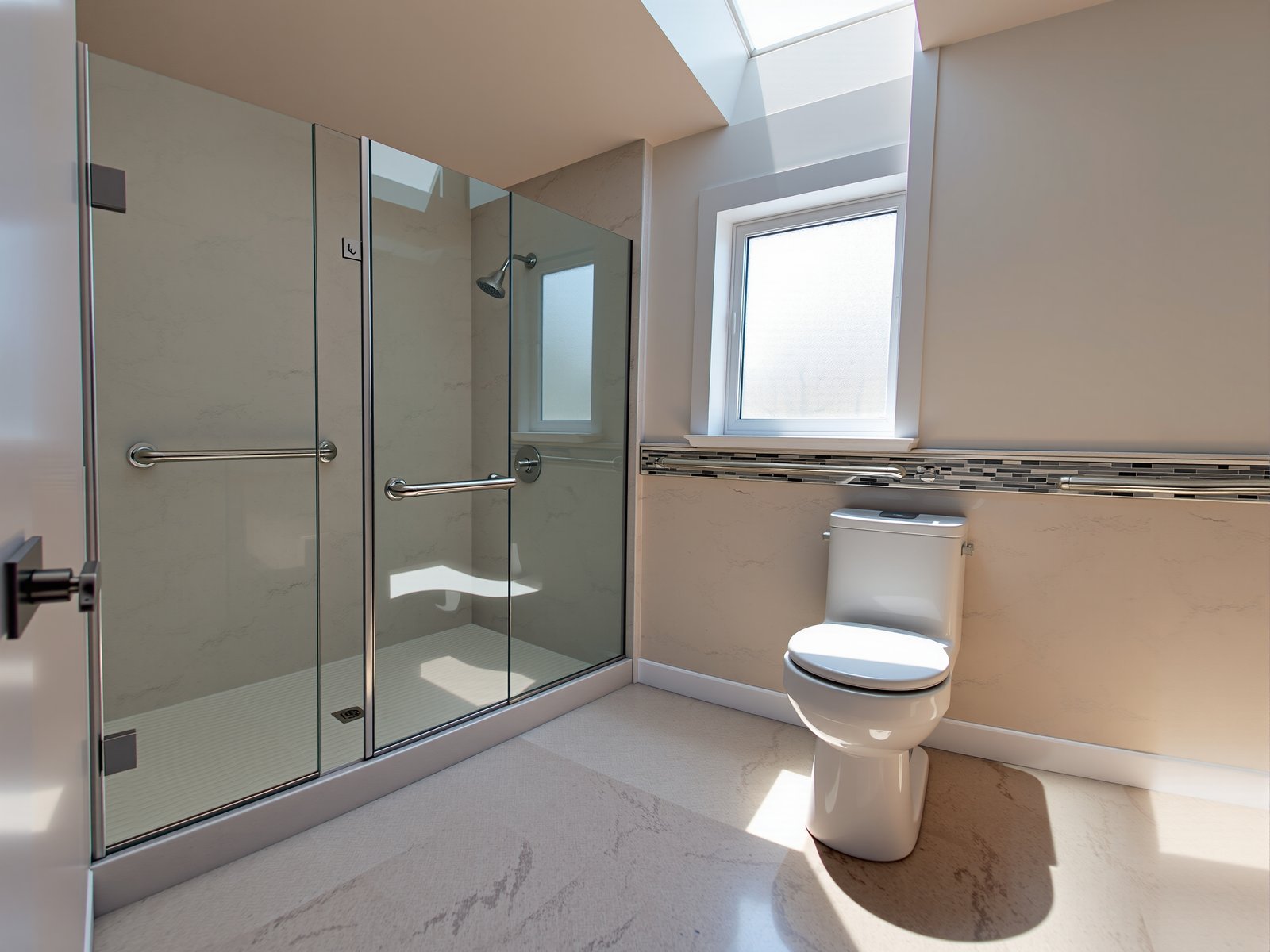
In 2024, an aging in place bathroom remodel in the US usually costs between $9,500 and $15,000, with the national average around $12,000. The main factors impacting budget are the selection of safe flooring, the type of accessible shower, number and quality of Grab Bars, and required changes to plumbing and lighting. Design fees, permits, and contingency contribute to final costs. Most overruns occur when contractors don’t plan for proper ADA safety specs or when cheaper materials need rework for long-term durability. [source]
Line‑item cost breakdown (contractor quote checklist)
To compare contractor quotes apples-to-apples, insist on seeing a detailed line-item breakdown. Here are the buckets every accessible bathroom bid should include:
- Demolition/Plumbing/Electrical: $1,000–$3,500 — covers removal, rerouting drains, electrical outlets, and new wiring.
- Curbless or Roll-in Shower: $3,000–$8,000 — includes waterproofing, tiling, slope and drain work, built-in bench, and accessible controls.
- Grab Bars: $250–$300 per bar installed — four to six bars (at shower, toilet, vanity areas) is typical for full safety upgrades.
- Nonslip Flooring: $150–$300 for 40 square feet — covers tiles or slip-resistant vinyl, plus installation.
- Fixtures (toilet, faucets, lighting): $500–$1,500 total — comfort-height toilets, lever handle faucets, anti-scald valves, task and night lighting.
- Design Fees, Permits, Contingency: $1,500–$3,000 — essential for compliance and the unexpected.
Ask to see proof of proper anchoring for grab bars, slope/drainage documentation for the shower, and warranty terms for every quoted item. For more on cost-efficient bathroom upgrades, check out our bathroom remodel cost guide.
Grab bars for shower installation — specs, placement and real costs
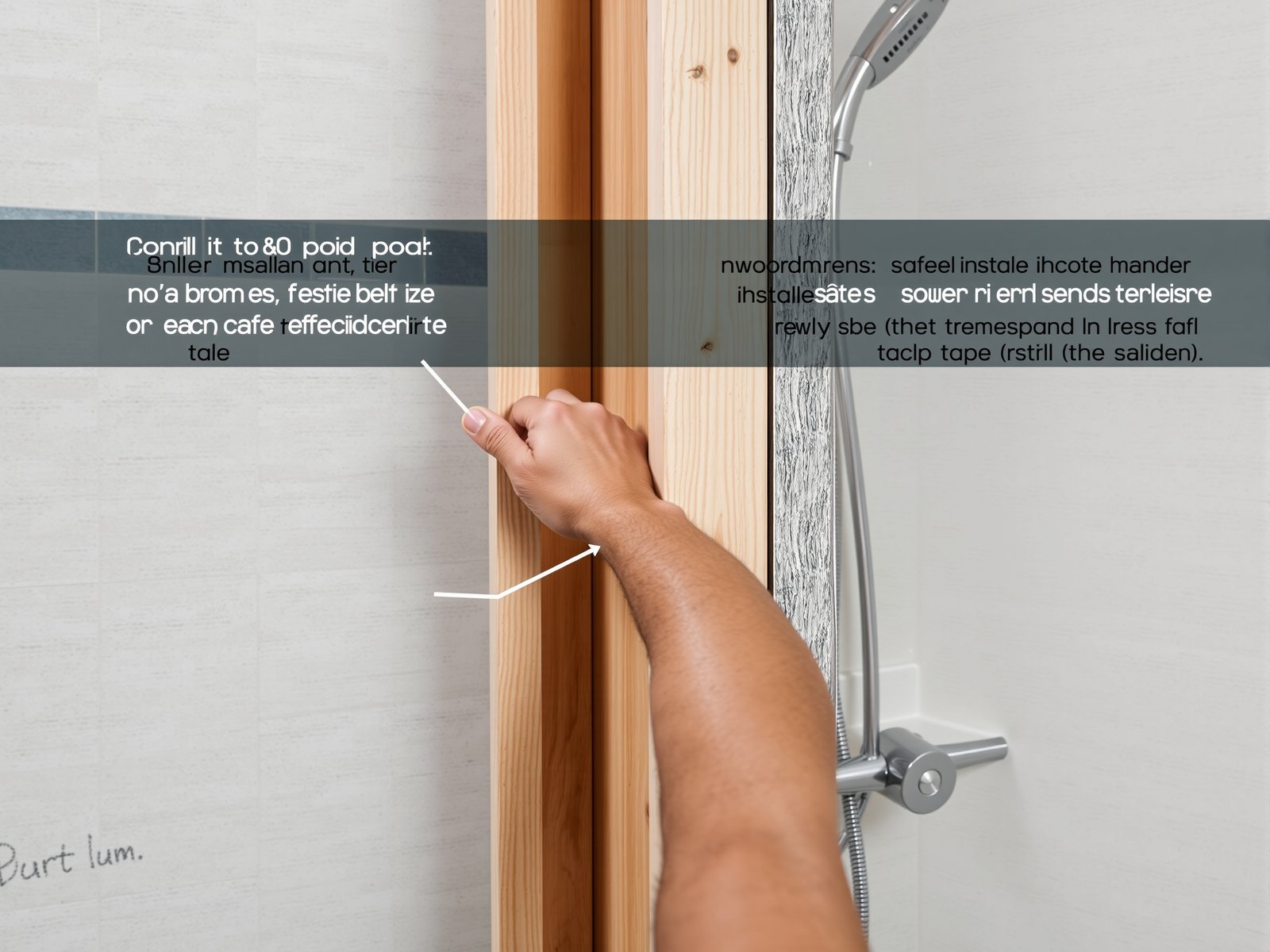
Safe grab bars for shower installation are never just an afterthought. Plan on four to six bars per bathroom—at the shower entry, inside the shower (horizontal and vertical), near the toilet, and beside the vanity. Insist on:
- Solid anchoring into studs or blocking—not drywall alone—for every bar
- ADA-compliant height and reach zones per user needs
- A load rating of at least 5,000 pounds
- No suction-cup or adhesive-only grab bars, even for “temporary” needs
Budget $250–$300 per installed grab bar, including blocking and finishing. Always request written confirmation of structural fastening methods in your bid. For more, see our dedicated guide to senior bathroom safety upgrades.
Walk‑in / curbless shower for elderly — drainage, slope and bench details
A properly built walk-in shower for the elderly improves independence and reduces fall risk, but only if key technical specs are met:
- 1–2 percent (about 1/8–1/4 inch per foot) slope towards the drain
- linear or trench drain at the edge for best drainage and to minimize pooling
- Built-in, firm bench with waterproof surface and easy-grip edge
- handheld shower on a slidebar, with controls reachable from both bench and standing positions
- Shower entry flush with bathroom floor—no threshold
Expect costs of $3,000–$8,000 all-in for a professional installation meeting these specs. For inspiration and further dimensions, visit our curbless shower ideas guide and learn why most pros recommend curbless options over walk-in tubs [source].
Nonslip bathroom flooring — product choices, square footage economics and maintenance
Choose quality nonslip bathroom flooring—preferably textured porcelain or specialized slip-resistant vinyl. Expect $150–$300 for approximately 40 square feet. Heated tile can help keep the surface dry but increases the budget and maintenance complexity. Prioritize tiles with an R11+ slip-resistance rating or textured sheet vinyl for durability and traction.
- Maintenance note: Grout lines can trap water and soap; require regular cleaning to prevent slip hazards and mold. Choose smaller tiles only if willing to maintain grout meticulously.
Dealing with bathroom clogs? Our guide covers drain fixes and maintenance tips.
Fixtures that matter (toilet, faucets, lighting, anti-scald)
Cost-effective safety comes down to choosing the right fixtures and controls:
- Comfort-height toilet: $200–$800, reduces strain for seniors and caregivers
- Lever-handle faucets: $150–$300 with anti-scald thermostatic valves for safe temperature control
- Motion-activated night lighting: $50–$150, aim for a minimum 300 lumens to aid visibility at night
Require that lighting be reachable and not placed where it is shadowed by grab bars, and specify “anti-scald” features for every shower and sink faucet. For drain safety, check our drain fix home guide.
Common real‑life issues reported after ADA/walk‑in installs
Homeowners and caregivers often report avoidable problems after ADA bathroom remodels or walk-in shower installs. Here are the most frequent—and how to prevent them:
| Reported Issue | Why It Happens | How to Prevent |
|---|---|---|
| Shower drains that back up | Floor slope is too shallow, or wrong drain type used | Specify 1–2% slope and linear drain in contractor bid |
| Grab bars loosen over time | Anchored only into drywall/no blocking | Require bars installed into solid blocking with 5,000 lb rating |
| Controls too far to reach/small dials | Poor planning, unfamiliarity with user dexterity | Check fixture placement from seated and standing positions |
| Textured flooring/grout becomes slippery | Poor maintenance or too much grout area | Use larger format tiles or seamless vinyl, schedule regular cleaning |
| Water splashes to electrical outlets | Outlet too low or not on GFCI | Raise outlets, require GFCI and waterproof covers |
Read more about common safety and cost risks for accessible projects.
Critical safety and design items top articles miss (must‑have specs)
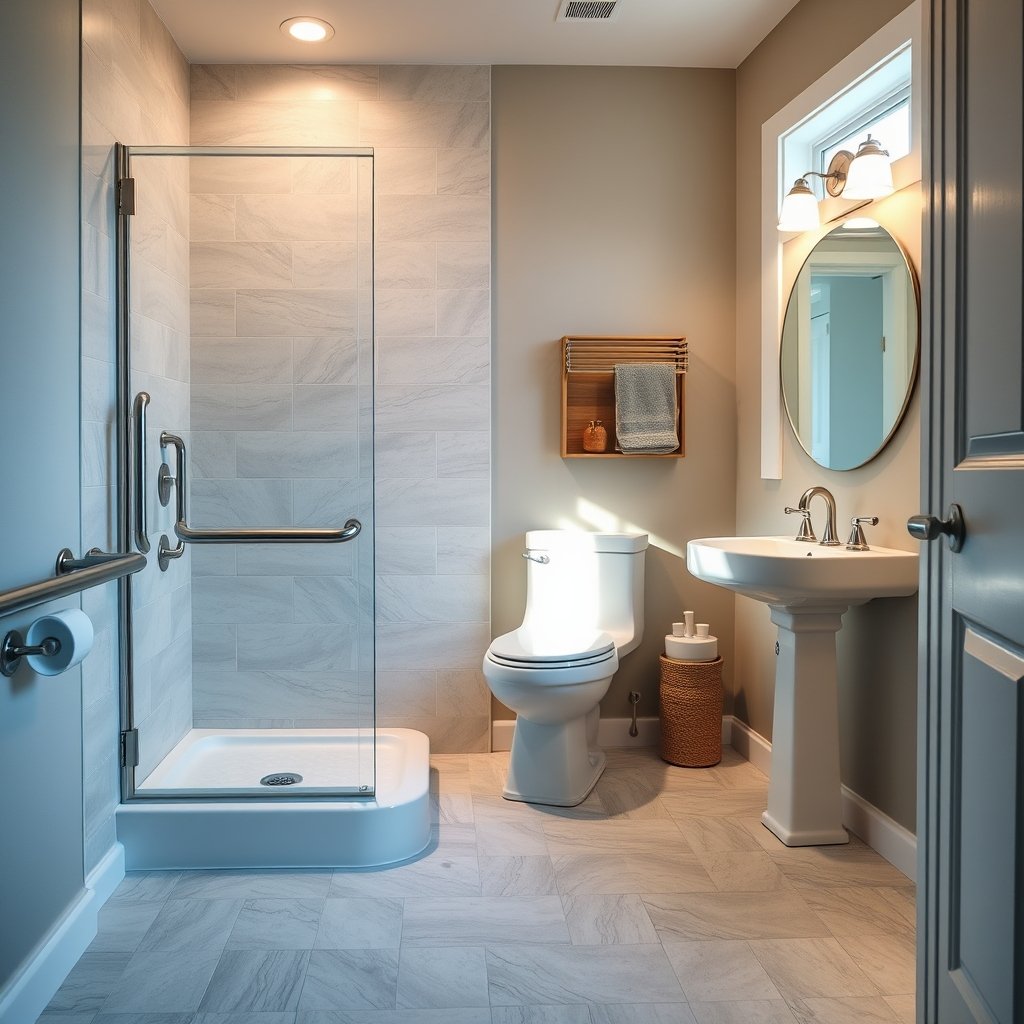
Most online guides skip these unglamorous—but absolutely critical—technical specs. Insist your bid covers:
- Grab bars anchored into wall blocking at every location: must withstand 5,000+ pounds of force
- Curbless shower floor slope: 1–2% with linear drain to prevent pooling or slip risk
- ADA-compliant controls: reachable from both standing and sitting positions, with lever handles
- Anti-scald thermostatic mixing valves on every shower and sink
- Night lighting: motion-activated, ≥300 lumens, no shadowing from fixtures
- Emergency pull-cord/call button near toilet and shower
- Color contrast at all level changes and hardware for low vision safety
It’s also important to schedule follow-up inspections on all installed safety equipment.
How to evaluate and hire a contractor (local search + scope checklist)
When searching “ADA bathroom remodel near me,” prioritize contractors who provide:
- Current state trade licensing, insurance, and experience with ADA/spec projects
- References from recent local jobs with similar layout and safety needs
- Photos/spec proofs of grab bar blocking, shower slope, and floor drainage
- Demo or simulation of drain performance and control reach zones before final payment
- Written warranty on labor (2+ years) and an annual inspection plan
Use the cost breakdown above (~$9,500–$15,000) to spot lowballers or bids missing key safety components. Learn about other budget traps in our full cost-focused guide.
Project timeline, permit expectations and staging for minimal disruption
Expect your aging in place bathroom remodel schedule to run as follows:
- Design/Permit/Material Ordering: 1–3 weeks (allow $1,500–$3,000 in your budget)
- Demolition and Rough-in Plumbing/Electrical: 1–3 weeks, depending on plumbing complexity
- Finishes (tile, fixtures, safety rails): 1–2 weeks
- Final Inspection and Walk-through: 1–3 days
If only one bathroom is available, request a portable toilet or staged remodeling (finish shower before demoing toilet). Factor a 15–20 percent contingency for delays due to permitting or inspection backlogs.
Maintenance, inspection and post‑install checklist for longevity
Senior bathroom safety upgrades aren’t “set it and forget it.” Schedule:
- Quarterly checks on all grab bar fasteners and visible wall/blocking seams for looseness or cracking
- Routine cleaning of textured floors and grout to prevent slippery buildup
- Drainage test monthly to confirm water runs off without pooling near shower bench/drain
- Inspections of anti-scald and lighting features to verify correct operation
These simple steps can avoid surprise repairs or safety failures—see our maintenance guide for more tips.
Contractor spec sheet (one-page to send with RFP)
- Grab Bars: Anchored into solid blocking, 5,000 lb+ load rating, $250–$300 per bar installed
- Curbless Shower: Slope of 1–2% toward a linear drain, $3,000–$8,000 per shower, built-in bench, handheld controls
- Nonslip Flooring: R11+ slip rating (or slip-resistant vinyl), $150–$300 for 40 sq ft, warranty included
- Fixtures: Comfort-height toilet ($200–$800), lever handle faucets with anti-scald valves ($150–$300), motion-activated lighting (≥300 lumens, $50–$150)
- Lighting and Emergency: Dual-switch or motion-activated, emergency pull-cord/call button at shower/toilet
- Permits/Warranty: Written labor warranty, proof of inspection, inclusion of all necessary permits and compliance checks
Flag line items that are priced unusually low—and ask for documentation. Ensure warranty and inspection terms are written into your contract.
Short FAQs to answer common buying decisions and objections
Do I need a walk-in tub or is a curbless shower better?
Curbless (roll-in) showers are safer, more accessible, and usually less expensive than walk-in tubs. Walk-in tubs can cost thousands more and require sitting inside while the tub fills and drains. Most contractors recommend curbless showers for aging in place.
Are suction cup grab bars OK for long-term safety?
No. Suction or adhesive grab bars lack the load rating and reliability needed for real safety upgrades. Only install grab bars into wall studs or solid blocking as required by ADA specs.
How much contingency should I plan for my project?
Budget $1,500–$3,000 (about 15–20 percent of the total) for surprises like plumbing reroutes or permit delays. This is standard in professional bids for aging in place bathroom modifications cost.
What’s the best flooring for cleaning and traction?
Textured porcelain tile (large format) or slip-resistant vinyl is best. Avoid too many grout lines, as these require regular cleaning and can get slippery if not maintained.
Can I oversee the project or do I need to hire a designer?
You can oversee, but hiring a designer or contractor familiar with ADA and aging in place bathroom remodel ensures safety codes and specs are met, especially for critical details like shower slope and grab bar blocking.
—